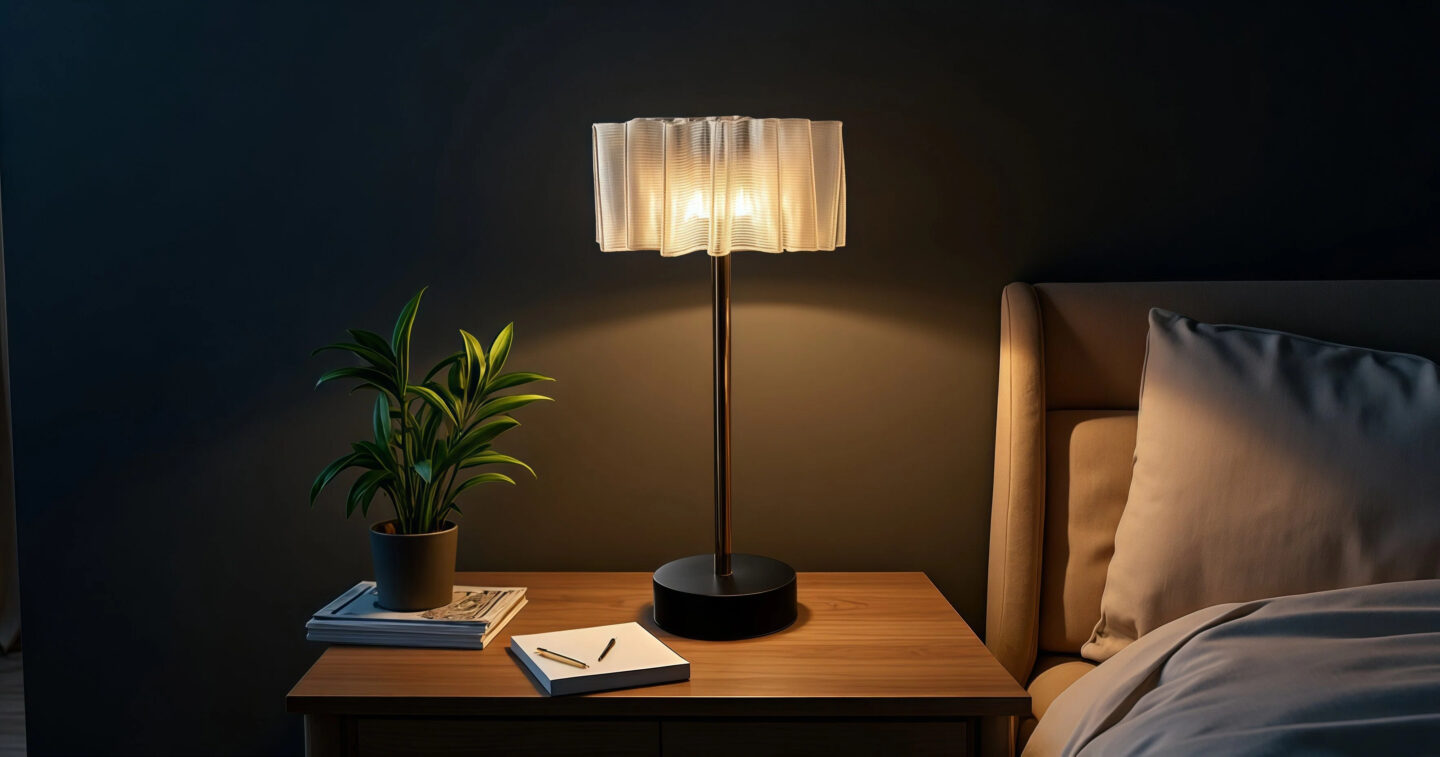
Selecting the right lighting is an art form that balances mathematical precision with aesthetic intuition. To choose the perfect table lamp, one must look beyond the surface design and consider the architectural scale of the space. If a lamp is too small, it won’t have much presence. If it’s too big, it can overpower everything around it. Paying attention to size and placement helps create lighting that feels comfortable and intentional.
The Golden Ratio of Lighting Design
The secret to interior harmony lies in the proportions between your furniture and your fixtures. When you set out to choose the perfect table lamp, the first rule is to consider the “eye level” of the person seated in the room. For comfortable lighting, the bottom edge of the shade should line up roughly with your eye level when sitting. That way, the bulb stays out of sight, and the light falls naturally onto your book, coffee table, or conversation area.
Essential Dimensions: How to Measure and Choose the Perfect Table Lamp
Before you buy a table lamp, it helps to check three simple measurements: the height of the table surface, the height of the lamp base, and the width of the shade. Together, these details make sure everything looks balanced and proportional.
| Room Type | Ideal Lamp Height | Placement Tip |
|---|---|---|
| Living Room | 24 to 34 inches | Ensure the shade doesn’t obstruct TV sightlines. |
| Bedroom (Nightstand) | 19 to 27 inches | Should be roughly the same height as the nightstand. |
| Entryway (Console) | 30 to 36 inches | Use a slender base to leave room for décor. |
| Home Office | 20 to 30 inches | Opt for adjustable arms for targeted task lighting. |
Strategic Placement to Choose the Perfect Table Lamp
In most living rooms, a table lamp fills an important role—it provides that comfortable, mid-level light between bright ceiling fixtures and low accent lighting.
If you’re choosing a lamp for a sofa table, go a little taller—around 30 inches or more—so the light rises above the back of the sofa instead of getting lost behind it. For end tables, a slightly shorter lamp usually works better, keeping the proportions balanced next to a side chair.
Choosing the Correct Shade Material and Shape
The lampshade is the engine that drives the light’s quality. If you want to choose the perfect table lamp for a cozy reading nook, a translucent linen shade is ideal as it diffuses light softly throughout the area. For reading, studying, or detailed tasks, an opaque or metal shade works best because it focuses the light straight onto your work surface.
And here’s an easy guideline: the lampshade should never be wider than the table beneath it.
Technical Coordination: Lumens and Color Temperature
A professional designer knows that the bulb is just as important as the fixture. Once you choose the perfect table lamp, you must pair it with the correct Kelvin rating. For bedrooms and lounges, 2700K (Warm White) creates a welcoming, relaxed atmosphere. For workspaces, 4000K (Cool White) enhances focus and reduces eye strain.
Final Integration: The Designer’s Checklist
To truly choose the perfect table lamp, evaluate the finished look from different angles of the room. Take a moment to think about materials. Does the lamp base—whether it’s brass, ceramic, or crystal—fit in with your existing furniture and hardware? And if the lamp has a cord, can it be hidden neatly, or will it end up looking messy?
Paying attention to these small details helps your lighting feel intentional and well considered, not just functional.
When you understand the size and layout of your space, you can choose the perfect table lamp with ease—and create a room that looks polished and thoughtfully put together.